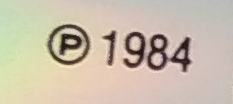
I seem to have used the [unknown] label for this purpose in the past myself. But the annotation says to use [No label] instead, so I guess that’s the right target.
I’ve used [unknown] label less than I’ve used [no label] for (phonographic) copyright relationships, but maybe it sounds better?
We indeed know the date but we don’t know the label/person of the relationship, we were not told by the packaging.
I think the DO NOT USE THIS LABEL means “do not use it as a release label”.
But using it as a relationship label, seems to be the raison d’être of this special label.
The annotation has a heading “Why keep this label if it’s of no use, then?” which seems to indicate that it shouldn’t be used for anything. Also other labels that shouldn’t be used as imprints generally say something more specific, like MCPS - MusicBrainz says “do not use this as a label or work publisher” and Deutsche Grammophon GmbH - MusicBrainz says “this is the company; for release labels, use …”
According to Wikipedia, when you see a (p) date with no label, the phonographic copyright is given to the producer.
(3) the name of the owner of copyright in the sound recording, or an abbreviation by which the name can be recognized, or a generally known alternative designation of the owner; if the producer of the sound recording is named on the phonorecord labels or containers, and if no other name appears in conjunction with the notice, the producer’s name shall be considered a part of the notice.
Interesting, but that is only in US law. That is likely to be normative for most of the rest of the world, but still worth trying to find out more. The description “producer” is also vague, because that can be a dozen different roles.
Or it’s questioning the correctness of the “DO NOT USE THIS LABEL” statement.
Actually, now that I took the time to follow the link and read the complete annotation, the heading “Why keep this label if it’s of no use, then?” is followed by an explanation of why the label is kept.
Also, at the top of the annotation is a link to a page called “special purpose label.” Following that link gets you another explanation for it.
I agree with @mfmeulenbelt’s points. Also, that could make it harder to use the relationships in the way I actually care about. I don’t really care who owns the rights, but I do care about identifying which release I have in an RG. So if I saw “℗ YYYY” on my release but some label credited in MB, it would take significantly more effort to figure out if that’s because it’s the default when none is printed, or if it’s a different release with a different printed ℗. If people do want to store the rightsholder based on US law, maybe we could get a guide to use a credit like “release phonographic copyright (℗) by Inferred Label as [inferred using US law]”? That way it’s clear that the ℗ label wasn’t actually printed on the release, and can be updated later if it turns out that the inference was incorrect.
And an even more clear quote about it: “Please note that you mustn’t use this label.”
Refining my idea above about label credits in case people want to store more information: Maybe this case should always use a label credit of “[unspecified]” or similar, but a label entity of either “[unknown]” or the actual rights holder? So “℗ 2026” printed on the release could be represented as either “release phonographic copyright (℗) by [unknown] as [unspecified] (in 2026)” or “release phonographic copyright (℗) by Real Label as [unspecified] (in 2026)”. That way it’s more explicit than just “[unknown]”, e.g., to differentiate a bare “℗ 2026” from illegible text in a low resolution image where the date and relationship are clear but the label is too hard to read. And it’s clear both what’s printed on the release and (if added) who the rights holder is.
Either way works for me, just figured I’d mention the other idea.