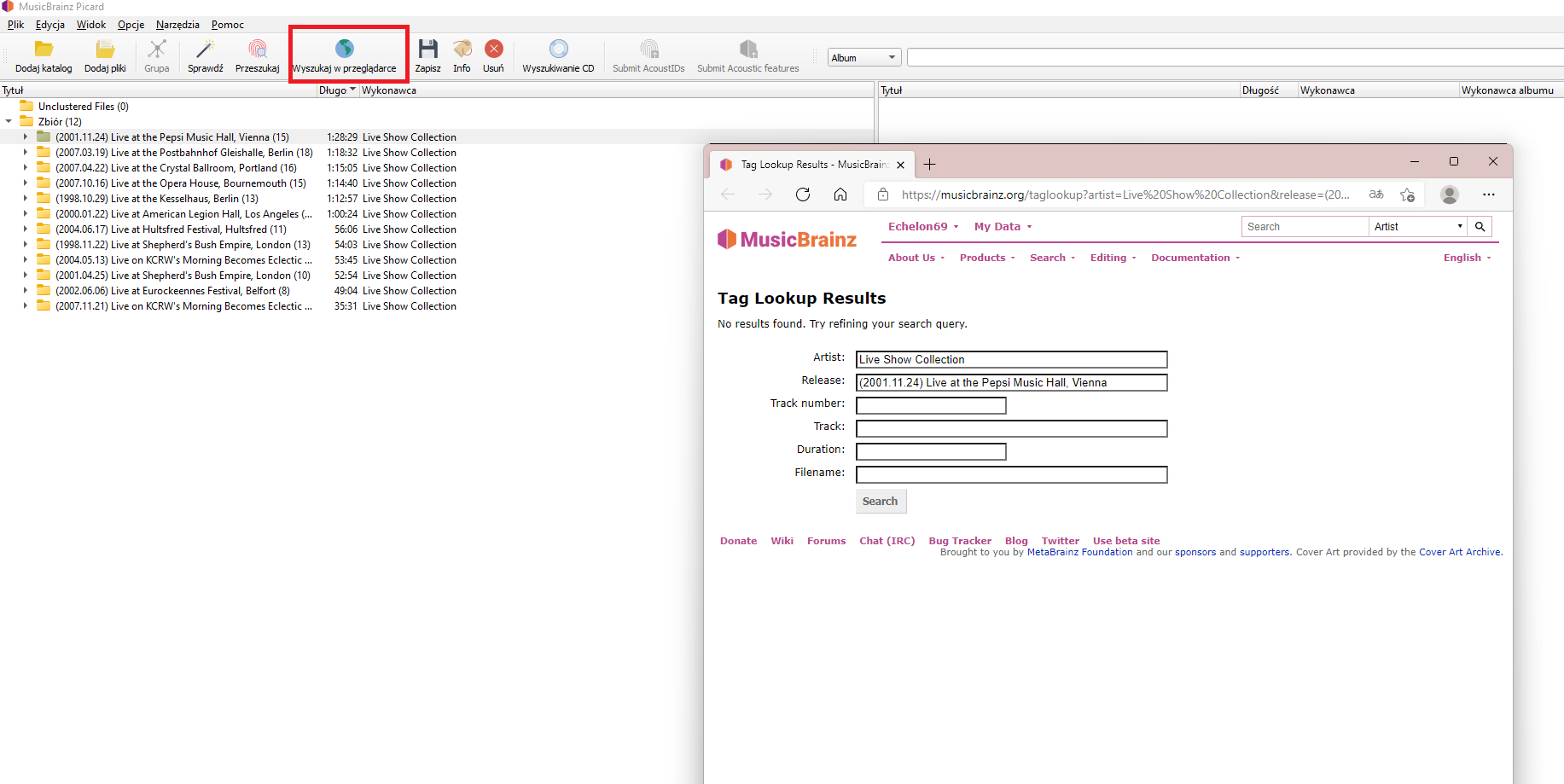
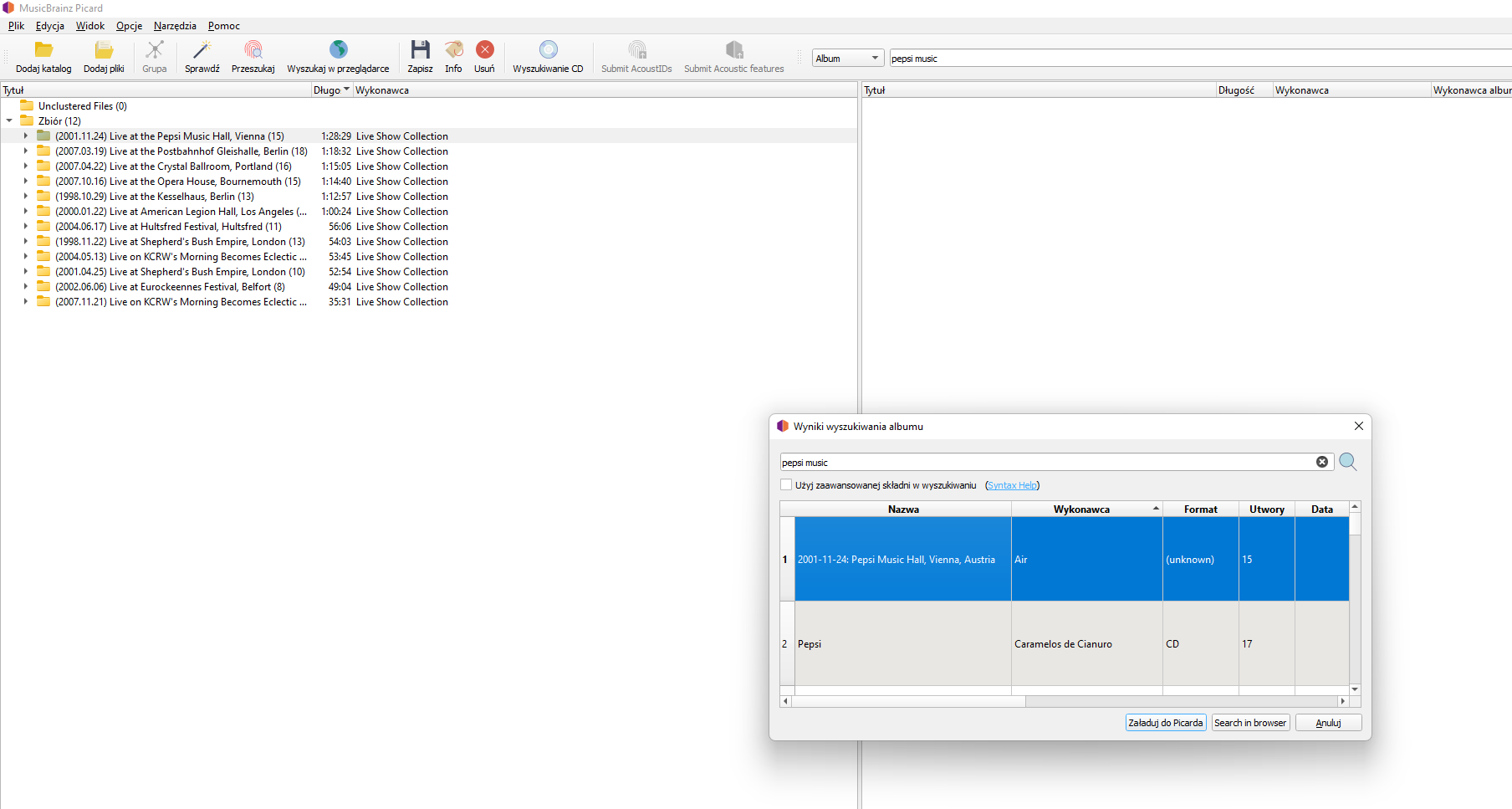
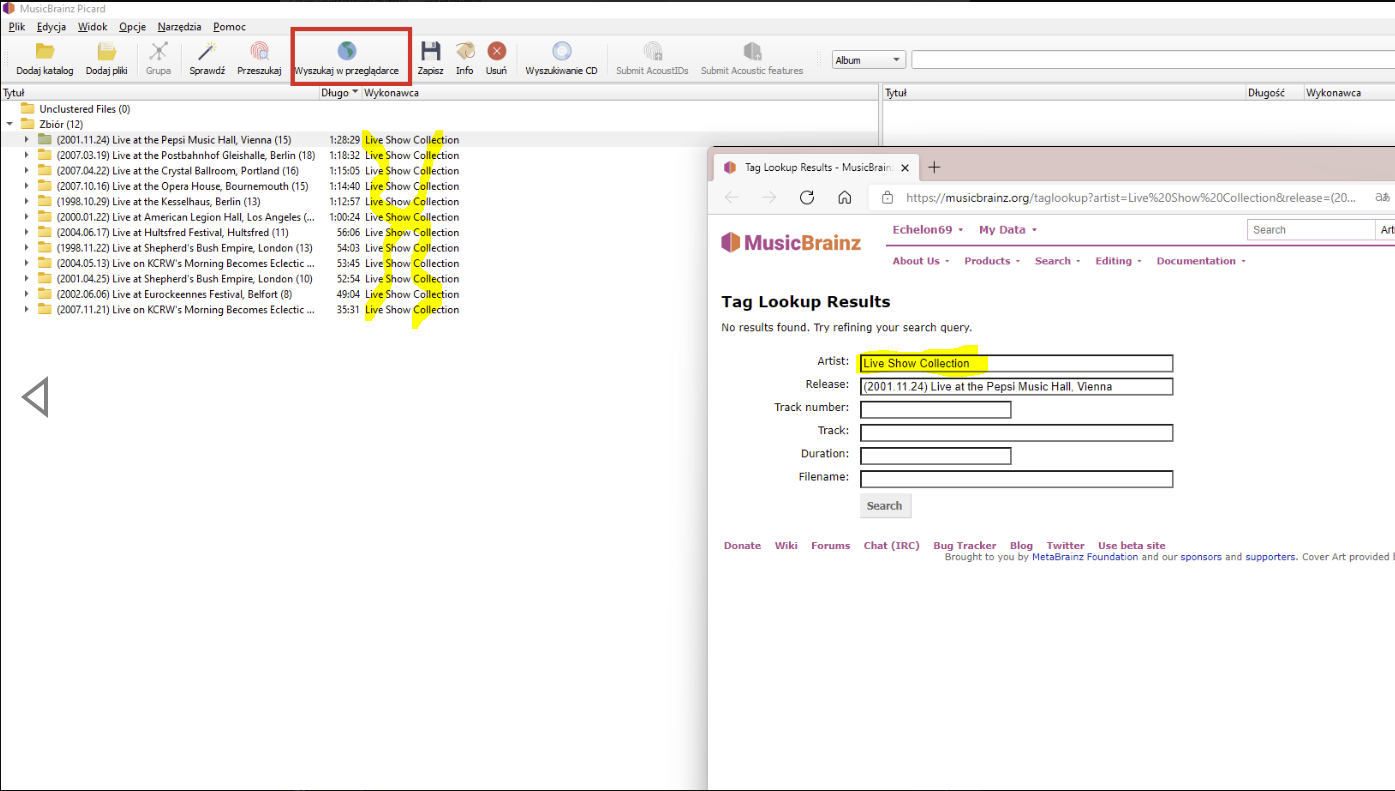
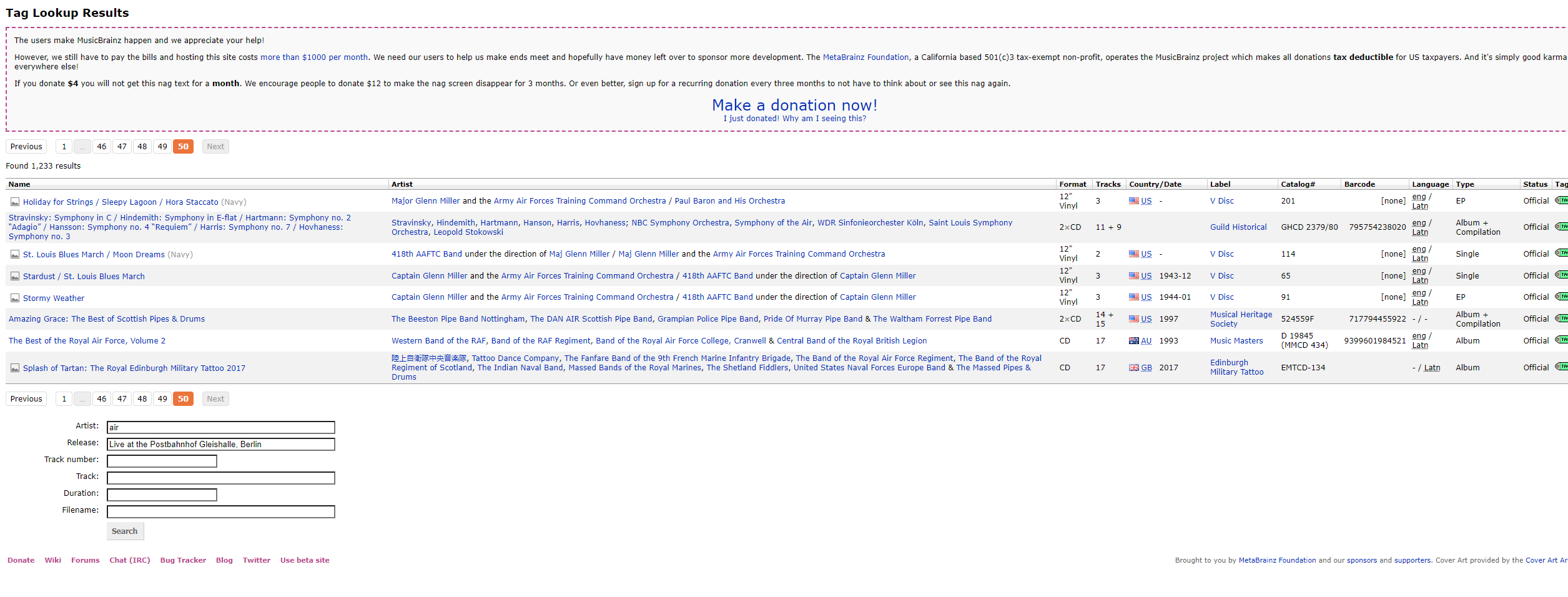
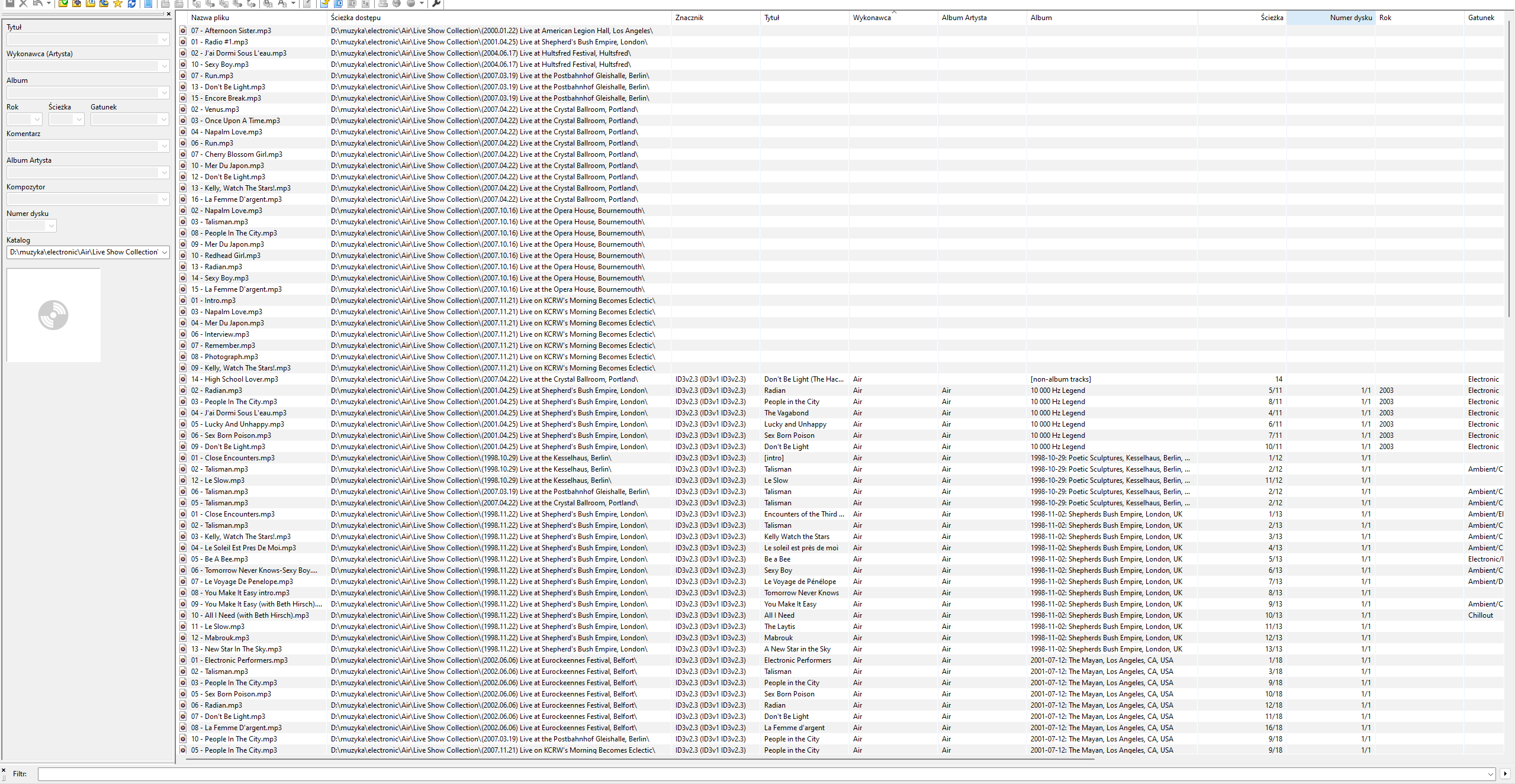
The first method needs your TAGS in the files to be an exact match. In your example your “Artist” is set to “Live Show Collection” and fails a lookup. Change that to “Air” and it will work
Some live ones on there. It looks like you have a few more than that. So you will need to do some Right Click \ Scripts \ Add Cluster as Release and add these to the database.
May be a good idea to start in MP3TAG and correct the Artist back to “Air” to make life a little easier.
Notice that the title is formatted in a specific way. YYYY-MM-DD: Location
You set them as “Digital Media” unless you know they came from CDs. As these are all new to the database, it makes it easier to add as there is no older data to link to.
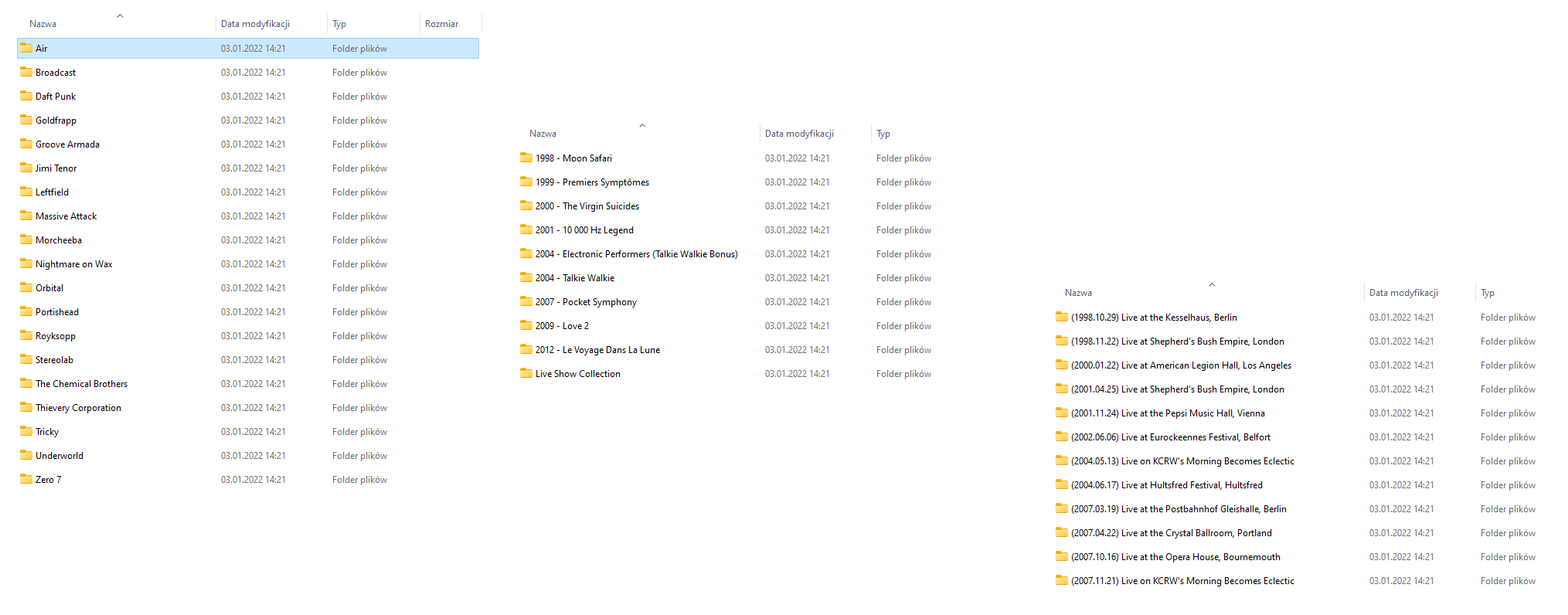
Picard’s cluster reads folder names where there is no TAG data.
It assumes the folder the files are in is the Album. And the folder above is the Artist. This is why it initially thought the artist is “Live Show Collection”.
A very important distinction when trying to make sense of what the heck Picard is up to:
Lookup: Tries to find an album based on existing tags. Tries to keep clusters together (e.g. if you have a cluster of 11 tracks it will try to match to a album with those 11 tracks).
Scan: Looks for a track match based on the audio in the file. Ignores existing tags. Will split your files among multiple releases.
In my opinion the best/only workflow for you (because you have folders with the full album inside) is cluster > lookup. Scan will find tracks from all over the place but will ruin your albums.
Some of your albums aren’t on MusicBrainz, you’ll have to add them